Name the level the customer needs
An apparel business may have a company name, several collections and hundreds of products. Trouble starts when those names do the same job. A buyer sees one name on a website, another on a garment and a third on a reorder sheet, then has to work out whether they refer to the same supplier. A clear structure makes those relationships easier to follow.
This guide is for an operator deciding which identity should remain stable as products change. The working distinction is straightforward: the house names the business customers return to, the line groups a related offer and the product reference identifies the item being ordered. These are practical roles, not a requirement to create three names for every garment.
Draw the business before naming it
List the current offers and the buyers for each. Note where those buyers order, how they ask for support and who invoices them. If the same people buy related products through the same route, one house with simple category labels may be enough. A separate line becomes more useful when it helps a customer recognize a meaningful difference.
Ask what is likely to change over the next few collections. Colors and seasonal themes may move quickly. The basic service promise may stay the same. Put the durable promise at the house level and leave the changing detail lower down. This is a planning exercise, not a prediction that the company will enter every category on the page.
Give the house a consistent role
The house name should answer the customer's question about who stands behind the offer. Use it consistently on introductions, order confirmations and support materials. If a collection has a prominent identity of its own, make its relationship to the house easy to see. The customer should not need an explanation from a salesperson to connect a garment with its supplier.
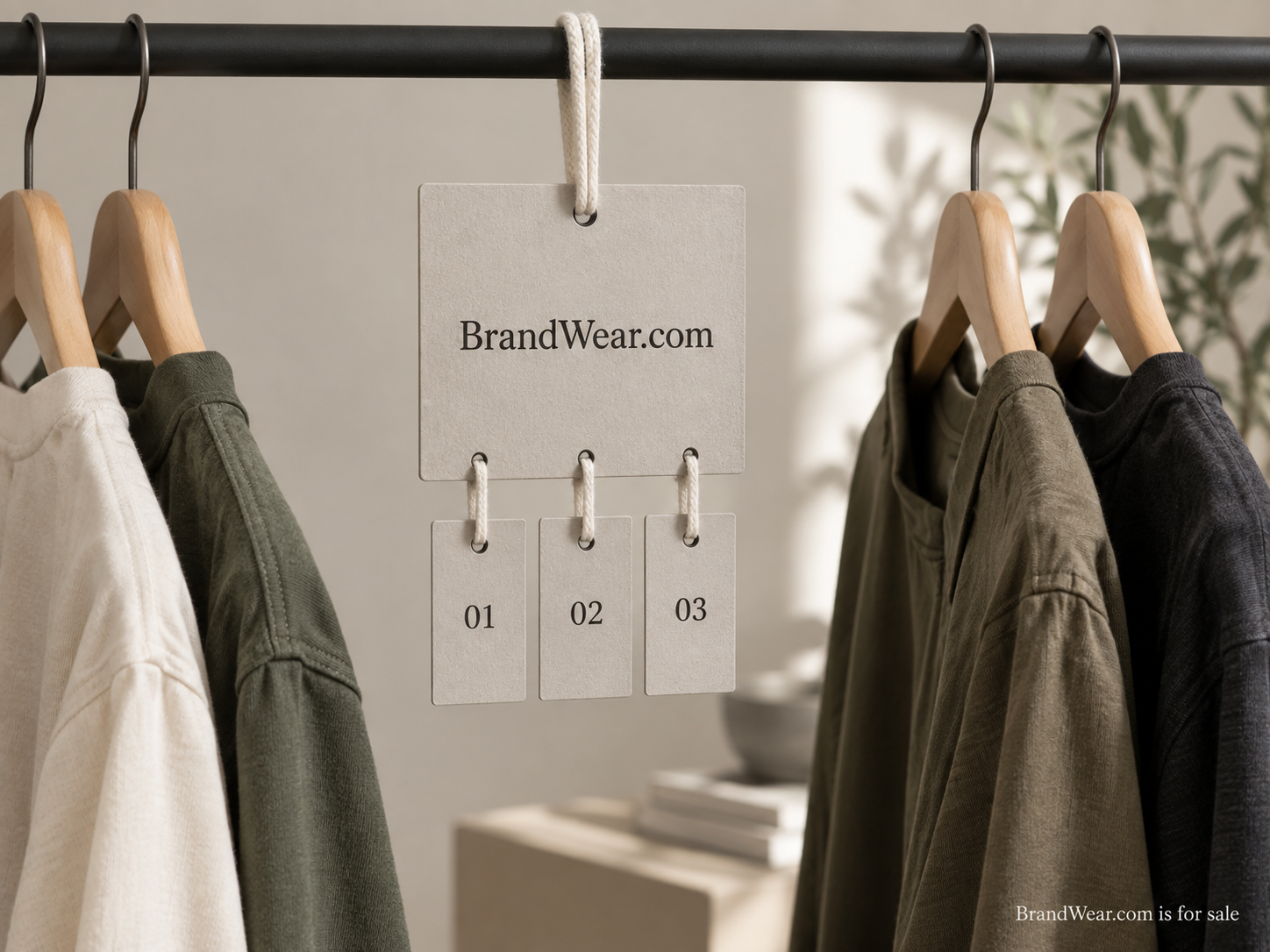
BrandWear.com could serve that house role for an apparel operator, with collection names below it. That is one possible use of the available domain, not a promise that a particular naming structure suits every buyer. Evaluate it against your actual offers and the way customers describe them, then decide whether the same identity can sensibly hold the next product you intend to launch.
Make a line earn its name
Before adding a collection name, write the distinction in plain language. It might be a staff uniform range, a seasonal retail capsule or a specific team program. If you cannot explain what the line changes for the buyer, a normal category label may be clearer. Naming every small assortment can create work without making shopping or ordering easier.
A useful line name can help a returning buyer find a familiar group of products. It can also carry a seasonal story while the house remains stable. Decide whether the line is expected to return, evolve or end after a fixed period. That decision affects whether you should invest in permanent packaging, long-lived navigation and stock references around it.
Keep the item reference separate
A product reference needs to lead to the correct item. Give it a stable place in the catalog and order record. Record size, color and other variants consistently. A poetic collection name is not enough information to distinguish a navy medium polo from a black large one, especially when someone is reordering months after the launch.
The customer-facing title can stay readable while an internal reference carries the detailed identity. For example, a title could describe a core crewneck and its color, while a product code identifies the exact style. Avoid hiding essential ordering information behind a story-led name. A buyer should be able to check the garment they want without understanding your entire naming system.
Build a small naming matrix
Create a table with columns for level, name, purpose, expected lifespan and where it appears. Start with the house. Add only the lines you can explain in a sentence, then include one representative product from each. The table will reveal whether several names compete for the same purpose or whether an important customer touchpoint has no consistent identity.
Use an illustrative structure to test the idea. The house is BrandWear.com. A line called Field Collection groups a set of everyday work layers. One product is a charcoal overshirt, with its own style reference and size variants. The house handles the customer relationship, the line helps organize the assortment and the product information identifies the exact garment.
Now test a seasonal change. If the overshirt is offered in a new color, the house stays the same. If the line expands with a compatible layer, the grouping may still be useful. If the offer changes into something unrelated, review whether the existing line name still helps the buyer. Do not rename the house merely because the next collection has a different color story.
Try the structure in ordinary documents
Put the proposed names into an email introduction, a garment label, a purchase order and a support reply. Read them aloud as if a customer were asking for help. “I need another one from the autumn collection” should lead to a clarifying question that the support person can answer from the records. If the names give no clue where to start, simplify the structure.
Ask someone outside the project to explain who sells the garment and what they would search for to order it again. This is a small comprehension exercise, not a market study or proof of future sales. Record the actual point of confusion. A vague reaction that the names feel inconsistent is less useful than learning that the collection looks like a separate company.
Plan what happens to old lines
A seasonal line may stop selling while customers still need care information, replacement pieces or invoices. Decide how those records remain findable. Keep a plain note of the line's status and the relationship to current products. If a replacement is only similar rather than identical, make that distinction clear in the support response and product information.
For an existing website, inventory the pages and links associated with a line before retiring it. Ask the person responsible for the website to plan how customers following older links will reach a useful destination. The operational requirement is continuity: a customer returning through an old email should still understand who they are dealing with and what help is available.
Give changes an owner
Choose who can introduce a new line and what information they must provide. A short proposal can include the buyer, the offer, the expected duration and the reason a category label is insufficient. That creates a useful decision point before new names spread into artwork, packaging and order forms.
Keep brand and legal review separate from the practical matrix. The matrix helps organize your offers; it does not establish that a proposed name is available to use. Have qualified counsel handle trademark clearance for the actual markets and products before committing to a new identity. Record the approved spelling and usage instructions alongside the commercial decision.
Apply it to the next launch
Take the next planned garment and place it into the structure you already have. Identify what truly needs a new name and what only needs a clear description. Then check the customer journey from the first announcement through the reorder. The strongest result is often a stable house, a small number of useful groupings and product information that makes the right item easy to request.
Save the matrix where design, sales and operations can all find it. Revisit it when the business changes its offer, rather than reopening the entire naming discussion with every collection. The aim is a system your colleagues can use during an ordinary working day, including the day someone needs to locate an old order quickly.