Write the order you actually need
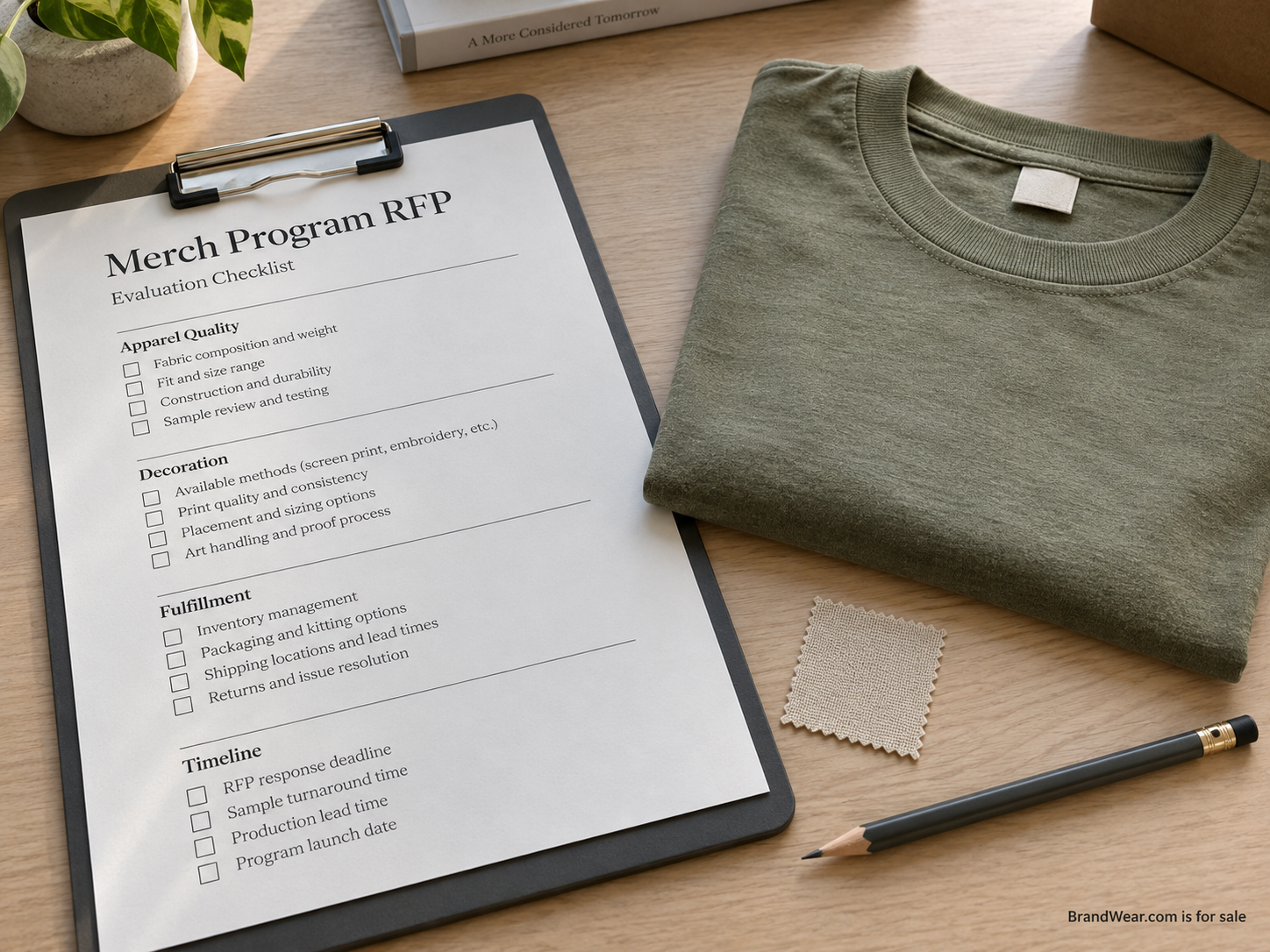
A merchandise request for proposals should help suppliers describe the same job. If one bidder assumes a single bulk delivery and another includes a year of individual shipments, the two totals do not tell you which offer is better. Begin with the buying situation, then give every bidder a common set of quantities, approvals and delivery requirements to work from.
The useful output is a brief that your own team could follow after the supplier is selected. It should explain who receives the goods, who approves changes and what happens after the first delivery. Treat the RFP as the beginning of an operating record. The questions below are a practical drafting framework; the example quantities are illustrative and should be replaced with your own information.
Describe the program in a paragraph
State the purpose without a long brand introduction. For example: the company needs welcome kits for new starters at three offices and home addresses, with one approved sweatshirt and one accessory. Orders will be confirmed weekly by the people team, and finance needs a monthly summary by department. That paragraph gives bidders a working picture of the service.
Then identify the program owner. The person collecting supplier responses may not be the person approving designs or managing reorders. List those responsibilities separately. Include a route for questions so bidders do not receive conflicting answers from several departments. If a response changes an important requirement, distribute the clarification to every bidder before the submission deadline.
Give volumes a shape
Annual volume is a starting point, not a complete forecast. Show the initial order, the likely reorder pattern and the biggest expected peak. A program with one large annual event may need a different stock arrangement from a program with steady weekly hiring. If the forecast is uncertain, state a range and explain what would cause the total to move.
Separate confirmed quantities from estimates. Ask suppliers to quote the same base case, then describe the effect of a smaller or larger order. Do not bury optional locations in a footnote and expect bidders to include them consistently. Put each destination and order type on a separate line, even if the first version is only a short spreadsheet.
For a worked example, consider an initial requirement of sixty kits followed by ten to twenty kits per month. The RFP could ask for the cost and operating approach for those three distinct quantities. This is more informative than asking for a price for three hundred kits with no explanation of how they leave the warehouse.
Specify the garment decision
Give suppliers enough direction to propose comparable products. Name the garment category, intended use, preferred fit choices and size range. State whether a specific blank is already approved or whether alternatives are welcome. If alternatives are permitted, ask each bidder to explain the difference rather than presenting a substitution as identical.
Describe the decoration location and approximate size, and attach the current artwork. Ask the decorator to identify any file preparation or sampling work required. Product-specific artwork rules matter: Printful's graphics and embroidery guide, for instance, directs users to the file guidelines and templates for the selected product. Your RFP should request the chosen supplier's equivalent instructions rather than assume one file is suitable for every garment.
Include physical sampling in the timeline. Say who receives the sample, who signs it off and what the approval covers. Fit approval and decoration approval can be separate decisions. A garment may feel right while the artwork needs another revision. Record those decisions clearly so a production deadline is not based on an approval that has only happened in part.
Ask how inventory will work
A low unit price may require buying more stock than the program can use. Ask who owns the goods, where they are stored and how the buyer can see the remaining quantities by size. Request the storage charges, stock reporting frequency and rules for damaged or missing units. Also ask how the goods can be returned or transferred when the program ends.
Give bidders a discontinued-style scenario. If the approved sweatshirt becomes unavailable, what do they do first? A useful answer names a notification step, a sample or comparison process and an approval owner. It should not rely on the supplier quietly choosing the closest available item. The buyer needs to understand the effect on both appearance and future replenishment.
Define the handoff to delivery
Identify the packing unit: by person, by department or by location. Include any card, insert, size label or presentation requirement. Ask for packing charges separately from product costs so a future change can be discussed sensibly. A single carton of loose garments is a different job from individually prepared welcome packs, even when the garment quantities match.
Confirm what delivery information the supplier needs and when it must be final. Ask how incomplete addresses, split shipments and failed deliveries are handled. For cross-border orders, have the relevant shipping specialist explain the responsibilities and documentation for the actual destinations. A generic statement that a supplier ships internationally does not settle the details of your program.
Use a pricing table everyone completes
Create rows for garments, decoration setup, samples, packing, storage, dispatch work and shipping assumptions. Ask bidders to show any minimum commitments and optional services. Where a price depends on a choice that has not been made, require the assumption to appear next to the number. This makes the later comparison easier to explain to finance.
For the illustrative sixty-kit launch, compare the total initial commitment separately from the expected monthly work. One supplier may be attractive for the opening batch but costly for small reorders. Another may charge more for setup while offering a simpler ongoing service. The decision belongs to your program's priorities, so write those priorities down before reviewing the totals.
Score evidence against the job
Keep the scorecard short enough that reviewers use it consistently. Suggested areas are product suitability, order handling, reporting, exception management and total commitment. Agree which requirements are mandatory and which are preferences. A bidder that cannot meet the receiving deadline should not hide that gap behind strong photography or a broad catalog.
Ask finalists to walk through a sample order and one exception using the information in your brief. A useful exercise is a new starter whose selected size is unavailable a week before joining. Listen for who contacts the buyer, what alternatives are offered and how the final decision reaches the packing team. The answer reveals how the proposed service would actually operate.
Finish with a pilot and a decision record
Before expanding the program, agree a limited first delivery and a review date. Record what you will inspect: complete kits, correct sizes, decoration against the approved sample and usable reporting. Ask the receiving team to note problems while the delivery is still fresh. A general statement that everyone liked the garments is encouraging, but it does not establish that the ordering routine worked.
After selection, keep the final brief, supplier clarifications and approved changes together. Send the operating version to the people who will place orders. The RFP has done its job when a new colleague can understand what is included, who approves an exception and how to request the next batch without reopening the entire supplier search.