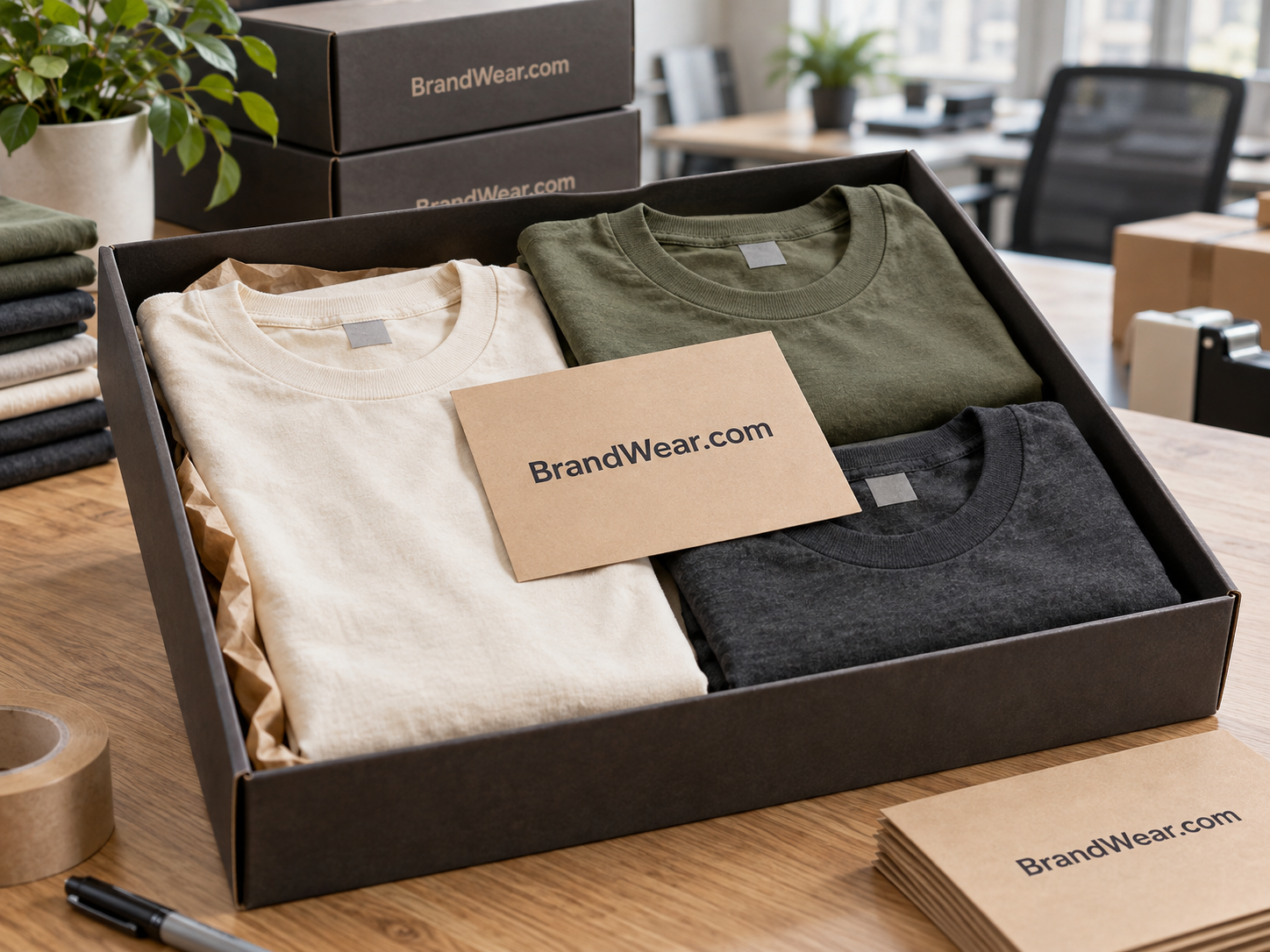
BrandWear.com gives a corporate merchandise program an immediate, category-clear identity.
Make the second order easier
An employee kit is easy to picture: a good sweatshirt, a useful bag and a card welcoming someone to the team. The harder question is what happens when another person starts three weeks later. Someone has to find the approved artwork, check the available sizes, arrange delivery and explain the charge. A corporate merch program built around BrandWear.com could take ownership of that repeat work.
The customer would be a people team, marketing department or operations manager who already buys apparel but spends too much time coordinating small requests. The offer should begin with a specific promise: one approved collection, a clear ordering routine and a named person responsible for exceptions. That is a more useful opening than a catalog containing every garment a supplier can source.
This is an illustrative business concept. BrandWear.com would be the public home for the program, while each client could have its own collection and ordering instructions. The name fits a service where the clothing carries the customer's identity and the program operator makes it easier to buy consistently.
Start with an onboarding collection
A sensible first collection could contain a tee, a sweatshirt and a cap, with a choice of sizes and one approved decoration per item. Offer the garments individually as well as in a welcome kit. Some employees will prefer a lighter layer; some offices may already hold bags. Let the buyer choose the useful pieces without making every order a custom project.
Separate the setup work from recurring fulfillment. Setup could include selecting blanks, approving samples, preparing artwork and recording packing instructions. Recurring work could include stock checks, packing, dispatch and a monthly usage report. Explain which activities are included in the program and which require a separate decision before work begins.
The buying team needs to understand the difference between owned stock and goods ordered on demand. Ask who pays for inventory, where it sits, what happens when a style is discontinued and how unused pieces are handled at the end of a contract. Those answers determine whether the buyer can commit to a collection with confidence.
Give each order an owner
A simple order form can work for the first customer. It needs the recipient's selected size, delivery destination, approved budget and required date. It also needs an internal approver. Avoid giving every employee access to every option merely because a storefront makes that possible. A small menu with sensible permissions can save more work than a large menu with a complex approval chain.
Keep a record of the approved sample, including the garment reference, color, decoration dimensions and packing arrangement. Store the current version where the person placing a reorder can find it. When a supplier proposes a substitute, pause that item until the buyer agrees. A similar photograph does not establish that two sweatshirts have the same fit.
Create an exception list from the beginning. It should include a missing size, a damaged garment, an incomplete address and a request that arrives after the normal dispatch window. Assign responsibility for contacting the recipient and approving any extra shipping charge. These small decisions are part of the service customers will remember.
Find customers through an existing routine
The first distribution path could be a relationship with an HR consultant, a workplace operations community or a regional business network. Show a sample welcome kit and a one-page explanation of the monthly routine. Ask a prospective buyer to walk through their last three apparel orders. The gaps in that conversation can tell the operator more than a general question about interest in merchandise.
A pilot should have a beginning and an end. For example, a company could use the program for one quarter of new starters at two offices. That keeps the assortment, recipient list and reporting manageable. The pilot proposal should say which decisions will be reviewed before the program expands to more departments or customer gifts.
An illustrative month in practice
Consider a customer expecting twelve new starters over a month. The buyer approves a core sweatshirt and cap, then sends a confirmed roster each Friday. BrandWear prepares the following week's kits and flags missing size choices before packing. A local office receives four kits together; remote employees receive individual parcels. The report separates garment use from shipping so the buyer can see what changed.
Two recipients ask for exchanges. Rather than treating those requests as unusual favors, the program follows an agreed exchange policy and updates the size record. A later reorder reflects the corrected information. The operator can then discuss whether the customer needs more stock in a particular size, using actual requests rather than guessing from the initial order.
Know what must be ready
This business needs dependable sourcing, an organized packing arrangement and someone who answers operational questions. It also needs enough working capital for the inventory model chosen with each customer. Before adding a second program tier, check whether the first one can deliver a complete kit, explain its charges and resolve an exchange without a chain of internal messages.
A useful next step is to sketch one customer, one collection and one month of orders. Identify the work your existing business can handle and the work a partner would need to provide. If that outline fits your plans, inquire about acquiring BrandWear.com with a short description of the customers you intend to serve and your expected launch timing.