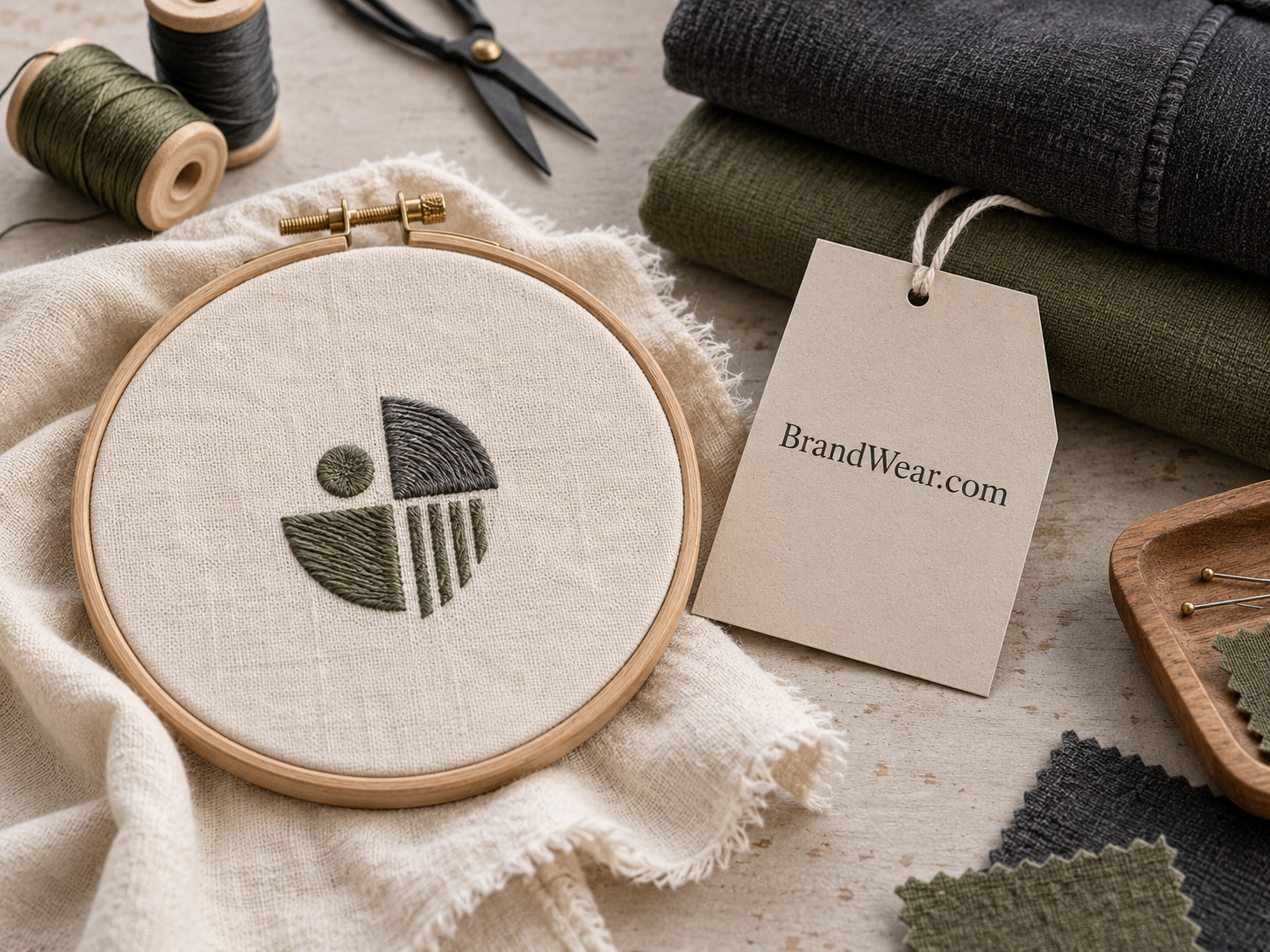
BrandWear.com sounds established from the first collection while leaving room to grow.
A studio for the first considered collection
Some buyers know exactly what they want printed. Others have a brand, a rough mood board and a deadline, but no clear garment choice. A custom apparel studio could serve that second group. Under BrandWear.com, the business could help a hospitality group, independent retailer or young company turn an idea into a small collection that feels like it belongs together.
The first offer should make the buyer's decision smaller. Instead of opening with hundreds of blanks and decoration choices, propose a collection session with a defined output: two or three garment options, a placement plan and a route to a physical sample. The customer buys help making a collection, with production following an agreed brief.
This is an illustrative concept for a future owner, not a claim of existing production capacity. BrandWear.com suits a studio whose work sits between a customer's visual identity and the clothes people wear. The studio could remain focused on commissioned collections even if it later introduces a small range of its own.
Choose a narrow first customer
A neighborhood restaurant group offers a useful starting point. It may need staff tees, an overshirt for the front desk and a retail piece customers can take home. These are related products with different jobs. Staff clothing has to work through a shift; retail clothing needs a reason to be chosen by someone who already has a drawer full of tees.
The studio should ask who wears each piece, where it will be worn and how often the buyer expects to reorder. Request examples of the current clothing and the brand's approved artwork. Ask what people dislike about the existing fit or fabric. These answers keep the conversation grounded in a garment someone will actually use.
A first collection could stop at two garments in two colors. That gives the studio room to demonstrate a coherent approach without multiplying sampling costs. If the buyer asks for a fifth style, explain what it adds to the intended collection and what decisions it introduces. Some variety helps. Unresolved variety delays approval.
Turn taste into an approval sheet
The useful studio document is a measured specification, not just an attractive mockup. Record the garment maker and style, material description, color reference, size range and decoration position. Give the artwork a version number. Identify who can approve changes and how a new approval affects the planned production date.
Decoration should be discussed with the production partner on the actual garment. A small stitched mark and a broad printed illustration create different effects. The operator can show options, but a sample should settle questions about appearance and feel. Printful's embroidery guidance, for example, asks designers to use product-specific templates. That is a useful reminder to request the chosen decorator's own requirements before preparing final files.
Make the sampling fee and revision allowance clear in the proposal. The customer should know whether the physical sample becomes theirs, whether additional colorways need separate samples and which changes trigger new production work. Clear boundaries let the studio spend its time improving the collection rather than renegotiating the same decision.
Build a production relationship before a catalog
A studio does not need to own every machine. It does need to know who will perform each part of the order and who is responsible if the result differs from the sample. Visit or speak directly with prospective production partners, compare their sample process and ask how they handle reorders of discontinued garments.
Keep the handoff short enough to use. A production pack should contain the approved specification, quantities by size, artwork files and delivery instructions. Ask the partner to confirm receipt of the current version. If a change arrives after production begins, record the affected units and agree the consequences before promising a revised delivery date to the customer.
Show the work where buyers already look
A credible distribution path could run through local designers, restaurant consultants and brand studios that do not manage apparel production themselves. Give those partners a clear referral brief: the kind of customer served, the smallest useful project and the information needed to begin. A small sample collection is more persuasive here than a promise to handle every category.
The studio's own website could show each collection as a short case format once real projects exist. Explain the buyer's problem, show the garments and describe the choices made. Until then, label sample collections as concepts. A prospective customer should be able to tell which work demonstrates an available design direction and which reflects a completed commission.
A collection with a clear boundary
Imagine a cafe planning a spring opening. The illustrative brief asks for one staff tee and one retail sweatshirt. The tee carries a small front mark and clear back lettering; the sweatshirt uses a quieter treatment. The buyer approves garment samples first, then decorated samples. The final order is split between staff sizes and a modest retail assortment.
After opening, the studio asks which sizes moved and which staff comments matter for the reorder. It does not redesign the whole collection because a new season has arrived. The core staff garment stays consistent while the retail piece can change. That distinction makes the next project easier to scope and gives the buyer useful continuity.
Bring a collection plan to the inquiry
The future operator needs design judgment, reliable production relationships and enough attention to keep specifications current. A practical first exercise is to draft a collection for one named type of buyer, including the approval steps and likely questions. Compare that model with the recurring service in the corporate merch concept. If commissioned apparel is the better fit, inquire about BrandWear.com with the customer category and collection scope you have in mind.