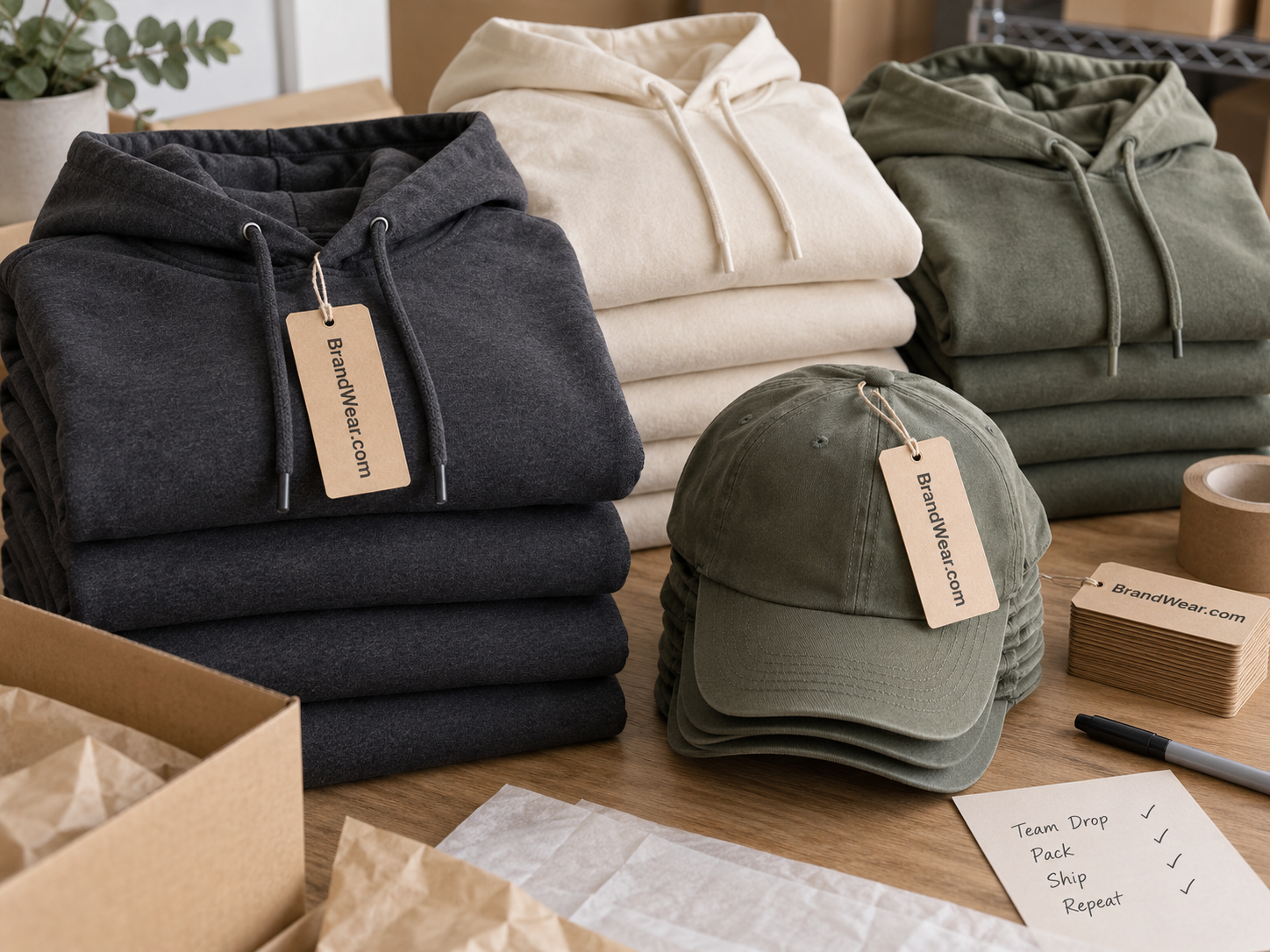
BrandWear.com is an intuitive banner for apparel that turns a group into a team.
Build around the date everyone knows
Event apparel has a deadline that does not move just because a size list arrives late. Staff need to be recognizable when the doors open. Volunteers need the right kit at check-in. A club wants its new season clothing before the first fixture. An event and teamwear label under BrandWear.com could organize its offer around those fixed moments.
The customer might be an independent event producer, a community sports organizer or a company running a recurring gathering. The business would help them choose a manageable collection, collect the right information and deliver packs that make sense at the venue. The value would be in a calm plan for a busy day, supported by clothing that people want to keep using.
This is an illustrative concept, with no existing event or league relationships implied. BrandWear.com could carry the house identity while each event or team keeps its own artwork. That gives the operator a consistent home across seasons without asking every customer to look like the same organization.
Separate staff clothing from merchandise
A staff tee and an attendee sweatshirt have different buying jobs. Staff clothing needs a clear size plan and a reliable allocation to named roles. Merchandise needs an assortment the organizer is willing to hold or sell. Put these into separate order groups even when they share a color palette. One is an operational requirement; the other is a retail decision.
For a first offer, choose a staff tee, a warmer layer and one optional attendee piece. Give the organizer a simple way to distinguish crew, volunteers and leads without creating a separate garment for every title. Before proposing visible role labels, ask who needs to recognize those roles and from what distance.
Let the buyer choose whether merchandise is preordered or stocked for the event. Preorders create a firmer quantity list but require an earlier decision from attendees. On-site stock gives people a chance to see the garment, while leaving the organizer with the uncertainty of unsold sizes. Explain those choices without promising that either route removes all inventory risk.
Work backward from receiving, not dispatch
The relevant deadline is when the correct person can receive and inspect the goods. A parcel arriving on the event date may still be unusable if it goes to a venue loading dock after the crew has moved elsewhere. Confirm the receiving address, named contact, opening hours and the last practical delivery date before discussing production timing.
Build a calendar with separate dates for garment selection, artwork approval, size submission, production confirmation and delivery review. Tell the organizer which decisions can still change at each stage. A late request for another size may be possible; a new decoration across the whole order is a different conversation. Clear cutoffs protect the event team's ability to plan.
Ask the production partner to confirm the schedule against the actual order. The operator should avoid treating a general lead-time estimate as a reserved production slot. If the schedule changes, present the available options with their tradeoffs and obtain a decision from the organizer. Keep that decision attached to the order record.
Pack for the person handing it out
The packing unit matters. A volunteer coordinator may want labeled individual bags. A merchandise table may prefer cartons grouped by style and size. A tour manager may need separate cartons for each stop. Ask what the person opening the first box will do next, then arrange the order around that action.
Use clear carton labels and a contents list. If a delivery is split, show which carton holds the essential staff pieces and which contains optional merchandise. Keep a small, explicitly agreed reserve for size exchanges or late crew additions. Record where that reserve goes and who can release it; otherwise a spare carton can disappear into a storage room while the coordinator assumes the stock is exhausted.
Find one recurring event to serve well
A distribution path could run through independent producers, venue coordinators or club administrators. Show them a sample packing plan alongside the clothes. A short explanation of how the goods arrive and are handed out can distinguish the offer from an ordinary product quote. Ask about the problems at the previous event before suggesting a new range.
Recurring events offer a chance to improve the same system. After delivery, keep a record of size exchanges, unsold items and last-minute requests. The next season's plan can use those observations. Avoid assuming the entire audience will be the same, but do use the previous order to ask more precise questions about the expected attendance and crew structure.
An illustrative weekend gathering
Imagine a two-day community event with a small paid crew and a larger volunteer group. The organizer approves a charcoal staff tee, a cream attendee tee and one hoodie. Volunteers submit sizes before a published cutoff. Staff kits travel to the organizer's office for inspection; retail stock goes to the venue during its receiving window.
On arrival, the staff cartons are separated by role and the merchandise cartons by size. A packing list names the reserve stock. After the event, the organizer records remaining quantities and offers the leftover retail pieces through an agreed follow-up sale. The operator can then plan the next gathering using both the ordering experience and the actual stock position.
Bring the calendar to the conversation
This business needs a production partner who can communicate clearly, a disciplined order calendar and people who understand event receiving. It also needs the confidence to set realistic limits when a deadline becomes too tight. If the model fits your operation, inquire about BrandWear.com with the kind of events or teams you intend to serve, the first season in view and the resources you would bring.