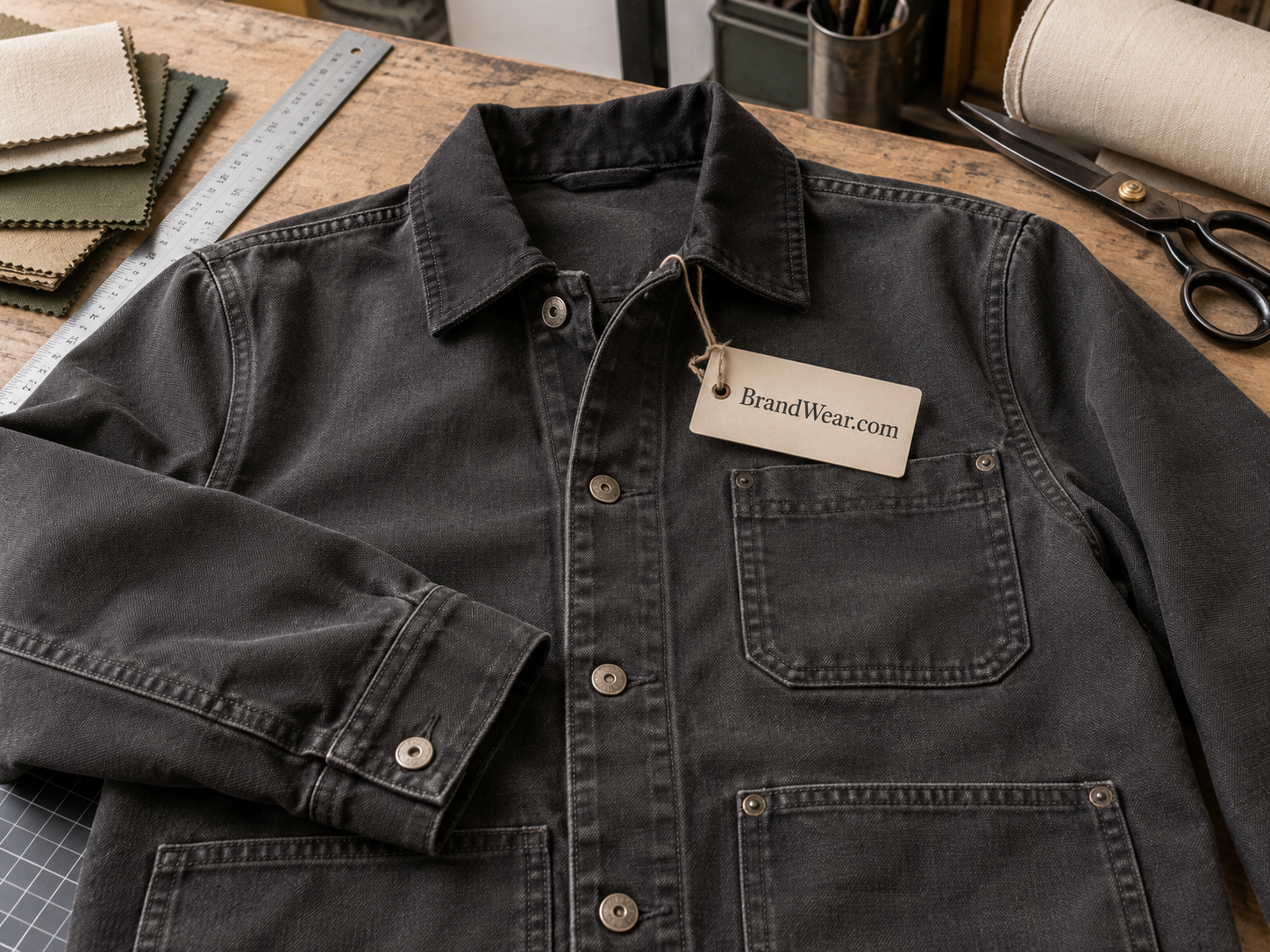
BrandWear.com connects company identity with the clothing teams rely on every day.
Make the uniform program easier to run
A workwear and uniform business can win a customer long before it adds another jacket to the range. It can make ordering clearer for a branch manager, help employees choose a fit and keep an approved style available for the next new starter. BrandWear.com could be the home for an operator who takes responsibility for those ordinary but persistent needs.
The first customer might be a service business with several locations and a mix of public-facing and back-office roles. The buyer wants a consistent appearance but does not want every location to solve clothing separately. A uniform house could provide a focused range, named role kits and one routine for replacements. The work is about continuity across locations rather than a new collection every month.
This is an illustrative business concept. The domain fits a supplier presenting work clothing as part of a customer's public identity. Any protective garments would require their own qualified selection and documented suitability; the concept does not imply a safety certification or an existing supplier approval.
Sell a role kit, then make it fit
Start with one role that has a clear clothing requirement, such as a reception team or a field sales group. Ask the buyer what employees do during a normal day, how they travel and who launders the clothing. Record the practical concerns: heat, movement, pockets, coverage and the need for an outer layer. Keep protective equipment decisions with the customer's responsible specialist.
Offer a small choice of fits within a consistent visual plan. Two people doing the same job may need different cuts to be comfortable. A uniform program should make those options easy to request. Arrange a fitting sample set where possible, with instructions for recording selections by garment rather than assuming a person's size is the same across every style.
The first kit could contain two tops and one layer, with replacements ordered individually. This avoids forcing an employee to reorder a complete pack because one item wears out. Give each component a stable reference and record the current supplier style. A plain ordering sheet can be enough if it reliably leads to the correct garment.
Give branches a controlled way to order
A location manager needs to know what is approved, what budget is available and when an order will arrive. The supplier needs confirmed sizes, a destination and an approver. Put those details in one form with a location code. A request reading “same as last time” should prompt a check against the previous order, not an assumption that nothing has changed.
Agree which decisions stay central and which a branch can make. Head office may approve the range and decoration while local managers choose quantities within an allowance. Make the exception route visible. If a new location needs a different layer, the central owner should decide whether it becomes a new standard or remains a specific exception.
Treat continuity as part of the offer
Ask suppliers how they communicate stock shortages and style changes. Keep a record of the approved alternatives, but do not substitute without the customer's agreement. A replacement top may look similar in a product photograph while fitting differently in person. Send a sample when a change would affect the way the team looks or feels.
Set a review date for the core range. At that meeting, look at exchanges, repeated shortages and garments that attract consistent complaints. Decide whether a problem calls for better size guidance, a different fit or a change of supplier. Use the review to make a specific improvement instead of expanding the catalog by default.
The business also needs a clear approach to personalization. An employee name stitched onto a garment changes how returns and spare stock can be handled. Collect the exact spelling, obtain approval and separate personalized items from general stock in the order record. The branch manager should understand the replacement process before approving the first batch.
Reach buyers through a branch problem
A useful distribution path could begin with regional service businesses that already have several locations. Ask operations managers how a new branch receives its first uniforms and how an existing branch replaces missing sizes. A supplier who can demonstrate a fitting pack, role list and reorder sheet has a concrete conversation to offer.
The first pilot should cover enough variation to expose problems without becoming an uncontrolled rollout. Two locations with the same role can reveal different receiving arrangements and size needs. One central buyer and one coordinator at each site give the supplier a workable chain of decisions. Agree what a successful pilot would show before dispatch begins.
An illustrative two-location rollout
Consider a maintenance company's customer reception staff at two depots. Each employee chooses a polo fit and a light layer from a sample set. One depot receives a consolidated carton; the other requests individually labeled packs. The supplier records those arrangements separately so the packing team does not have to infer them from an address.
A new starter joins after the initial order. The manager selects the role kit, confirms the person's sizes and uses the same location reference. The supplier can identify the approved decoration and dispatch format immediately. At the first review, the buyer can compare the reorder experience with the initial rollout and decide whether to bring another role into the program.
A practical acquisition conversation
This model suits an operator with sourcing discipline, customer support and an interest in recurring accounts. Before inquiring, list the locations and garment categories a first program would serve. Separate ordinary uniforms from any specialist protective needs. Bring that outline, the resources already available and the proposed timing to a private conversation about acquiring BrandWear.com.